Who we are
A guide-owned trekking company in Nepal. The person who plans your trek is the person who leads it.
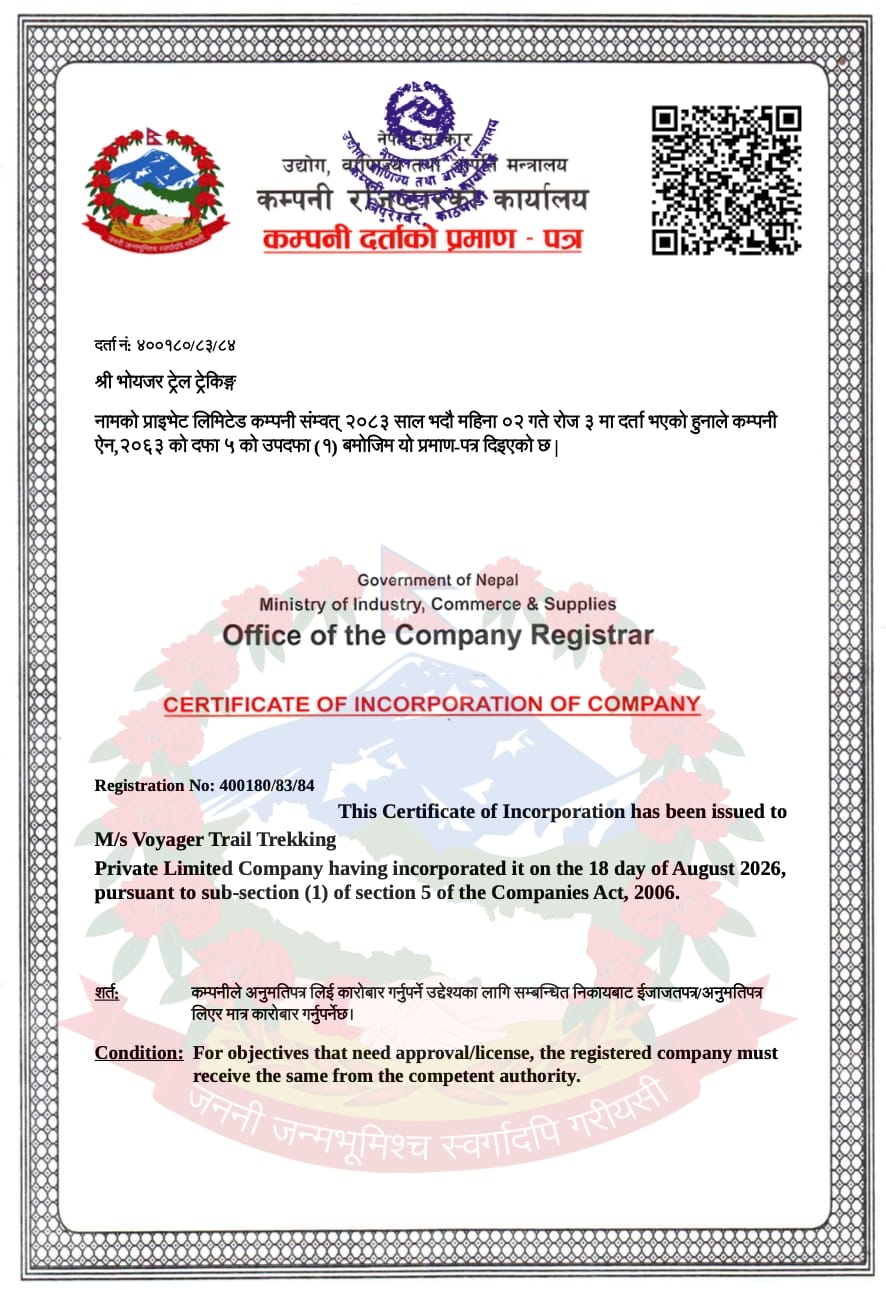
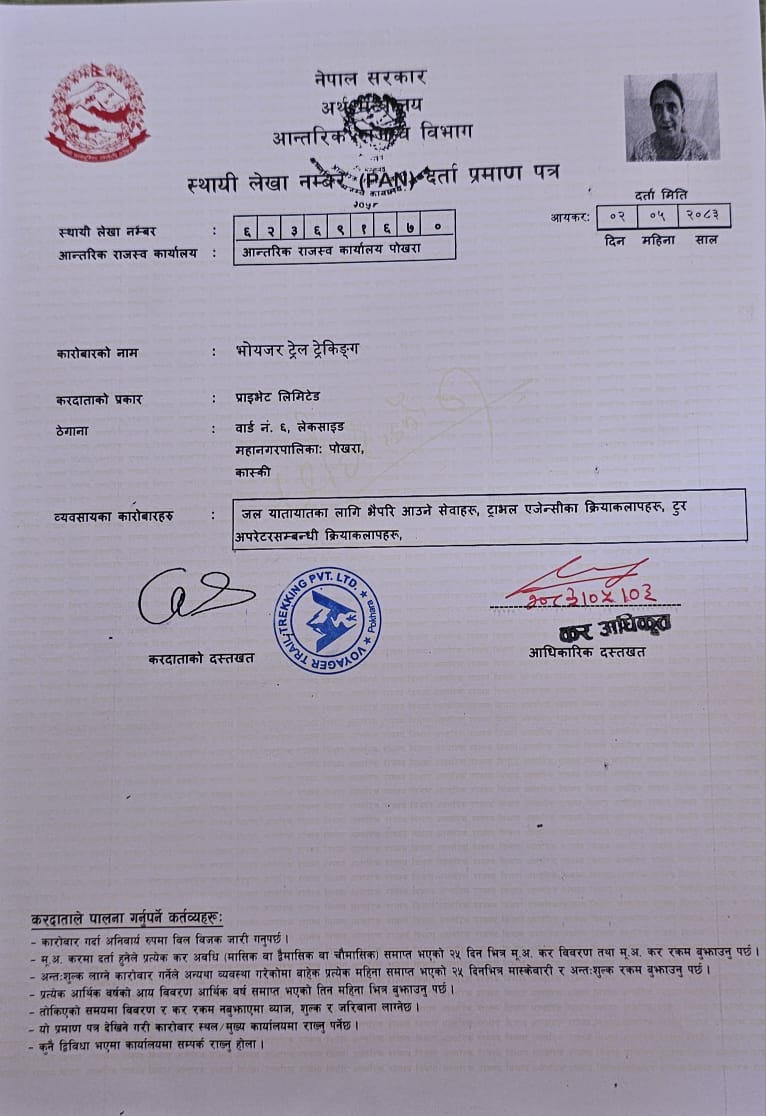
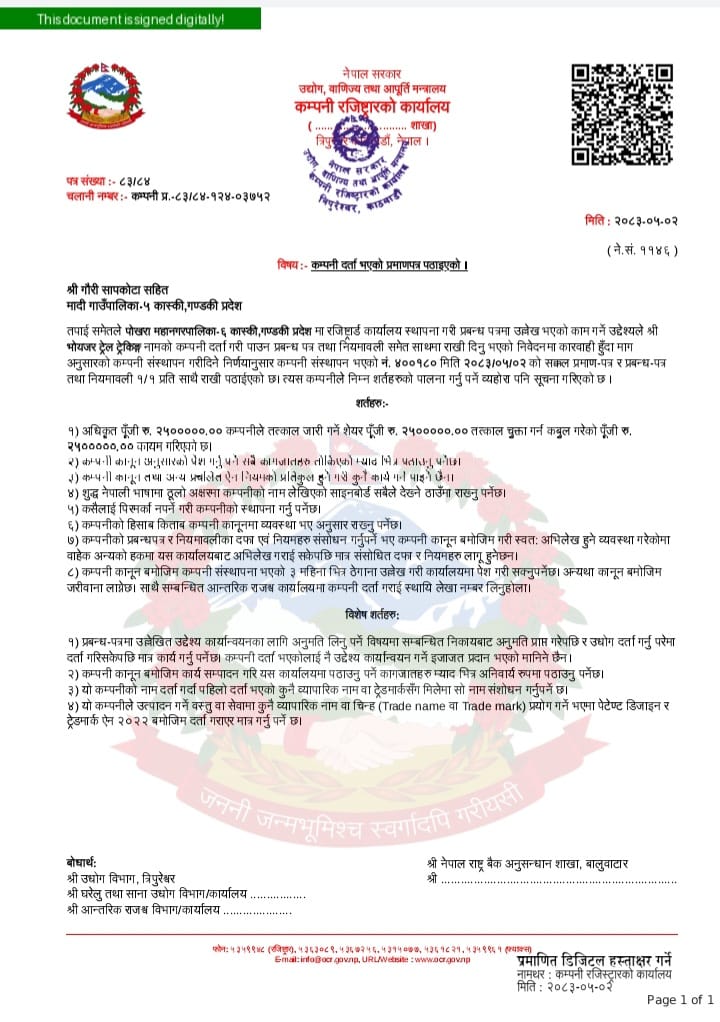
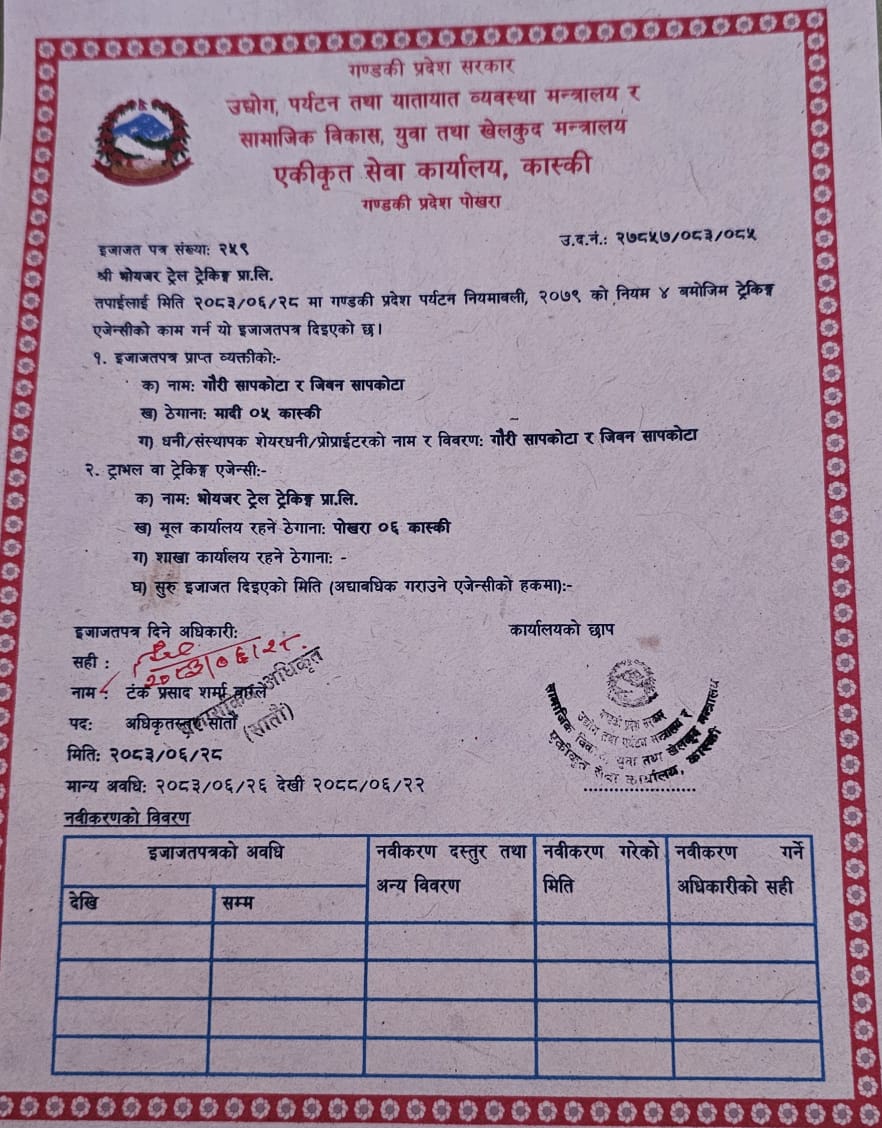
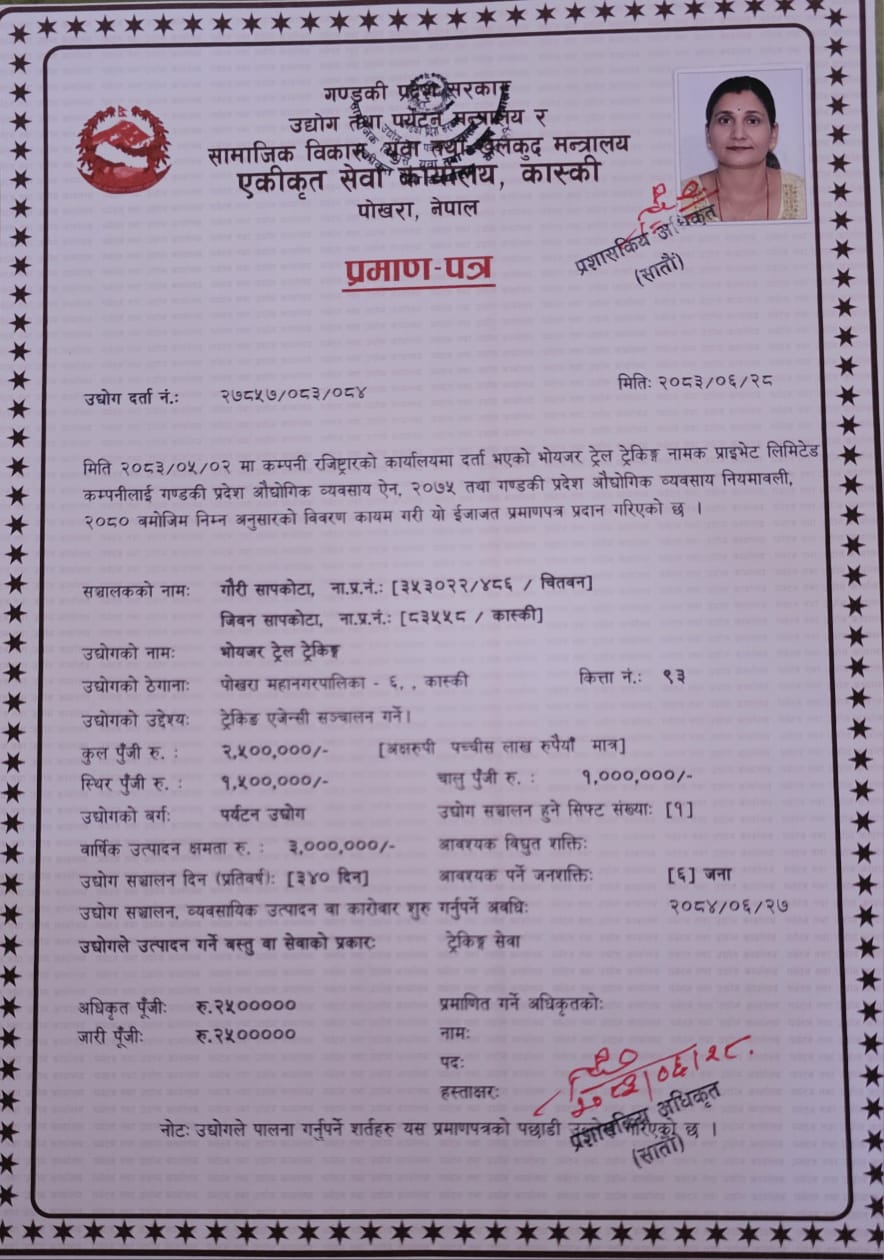
Voyager Trail Trekking Pvt. Ltd. was started by a working trekking guide after fifteen years of leading other people's trips. Those years were spent on the trails of the Annapurna and Everest regions, in Langtang, around Manaslu, and on the long walks north into Upper Mustang and Dolpo — in the shoulder seasons and the winter as well as the autumn rush.
Guiding for someone else teaches you where the compromises get made: the acclimatisation day removed to shave a hundred dollars off a quote, the porter carrying more than he should, the itinerary sold to a client it was never going to suit. This company exists to run the trips the way they should be run, and to be answerable for them directly.
So the arrangement is simple. You write to us, and a guide reads it — not a sales desk. You get an honest reply, including when the trek you have in mind will not fit the days you have, or when a different route would suit you better. The plan you agree is the plan that is operated, by the people you agreed it with.
We work across the regions we know well rather than listing every trail in Nepal: Annapurna, Everest, Langtang, Manaslu, Upper Mustang and Dolpo, plus short walks in the hills around Pokhara for travellers with a few days rather than a few weeks.
Questions
For most of our treks, no. If you walk regularly at home and are comfortable with five or six hours on your feet for several days running, you can do a great deal in Nepal. The harder routes — the high passes, the restricted areas — do ask for previous multi-day experience, and we will tell you plainly which category your plan falls into rather than taking the booking and hoping.
Fit enough to walk uphill for several hours, several days in a row. Trekking in Nepal is walking, not climbing — no ropes, no technical ground on the standard routes. Fitness makes the days more enjoyable, but it does not protect you from altitude, which is a separate matter and the reason our itineraries keep their acclimatisation days.
Small, and the number is written into each itinerary rather than left vague. Small enough that the guide can see how everybody is walking — which is how altitude problems get caught early — and large enough that the evenings in the lodges are good company. If you would rather walk privately, we run private departures on any route.
Autumn (late September to November) is the most reliable, and spring (March to May) is the best for rhododendron and warmth. Winter is excellent below about 3,500 m and very quiet. During the monsoon, Upper Mustang and Dolpo sit in the rain shadow and stay dry while the rest of the country is wet. Tell us when you are free and we will tell you where it works.
Permits, transport as described in the itinerary, lodges, meals on the trail, and the wages, insurance and equipment of your guide and porters. The quote itemises all of it before you commit. What is not included — international flights, travel insurance, drinks, tips — is listed just as plainly.
For the main routes in the main seasons, a few weeks is comfortable and more is better for the busiest October dates. Restricted areas — Upper Mustang, Manaslu, Dolpo — need longer, because the permits are issued for fixed windows and cannot be arranged at short notice. Write early and we will tell you what your dates actually require.
Yes, and it is a condition of joining any trip. It must cover trekking to the maximum altitude of your itinerary and include helicopter evacuation and repatriation. We will ask for the policy number before departure. This is the item people under-buy most often and the one that matters most on a bad day.
That is most of what we do. Send the days you have, roughly when, and how hard you want to walk. You will get two or three routes that genuinely fit — including, when it is the truthful answer, a note that what you are picturing needs more days than you have and what we would do instead.
On the main routes you sleep in teahouses — family-run lodges with a bed, a dining room with a stove, and increasingly hot water and wifi. Rooms are twin-share and bathrooms are usually shared above about 3,000 m. In the remote regions such as Dolpo, some nights are camping, and we carry the kitchen and tents with us.
We descend. That is the treatment, and it is not negotiable or a refund conversation — it is the reason you hired a guide. Every guide carries a pulse oximeter, is trained to recognise the early signs, and has the authority to turn the group around. Our itineraries build in the acclimatisation days precisely so this happens rarely.
A porter carries your duffel and you walk with a daypack. Loads are capped and weighed, and porters are insured — including helicopter evacuation — provided with proper kit, and stay in the same lodges and eat the same food as the guides.
Yes. Teahouse kitchens cook a limited menu very well — dal bhat, noodles, potatoes, eggs, soups. Vegetarian is easy anywhere. Vegan and gluten-free are workable with notice, and we tell the lodges ahead. We recommend purifying water rather than buying bottled: it costs less and leaves no plastic in the mountains.